
Find a familiar face
Browse the cast by their fictional home cities. These are character settings, not the locations of real players. Every profile below describes the current Hold’em behavior; other games use their own rules.
Open “Meet” for a little table talk, or follow the game-profile link for the existing in-game view. Neither action selects an opponent for your next table.
New York

Chip
“Short Stack” Sullivan
The curious caller
Calls smaller bets with a wider range. Usually raises for value.
What to watch: Small bets may get called. A big price can still change his mind.
Meet Chip
Runs the breakfast shift. Calls a little too often and considers folding a perfectly good napkin a waste of time.
“I've seen worse before breakfast.”

Juno
“Two-Way” Park
The positional all-rounder
Plays more hands in late position and balances calls with pressure.
What to watch: Her seat matters: early and late raises mean different things.
Meet Juno
Hustles at ping-pong, takes her time at poker. Her eyebrows do most of the table talk.
“Good plan. I have a different one.”

Ash
“The Professor” Shah
The price-and-equity player
Uses estimated strength and pot odds with a larger safety margin for expensive calls.
What to watch: Make a draw pay a meaningful price.
Meet Ash
Chess-club organizer. Counts the options, straightens the chips, then decides most hands aren't worth the paperwork.
“That sounded better before the math.”

Jade
“Fresh Cut” Lin
The selective position player
Starts carefully, opens up in late position, and keeps expensive calls selective.
What to watch: Her position matters more than her poker face.
Meet Jade
Streetwear designer, 27. Can spot a crooked seam across the room. Equally willing to leave an unfinished hand on the cutting-room floor.
“Great concept. Needs editing.”

Quinn
“Off Label” Navarro
The late-street stylist
Checks more medium hands and uses larger bets with strong hands or selected bluffs. Looks for late-position openings.
What to watch: An impressive presentation is not proof of a strong hand.
Meet Quinn
Vintage stylist, 27. Can make a thrift-store jacket look like a deliberate life decision. Their larger bets occasionally require the same confidence.
“The jacket is vintage. The plan is recent.”
Chicago

Pearl
“The Vault” Jackson
The patient value player
Selective before the flop, with strong value raises and few bluffs.
What to watch: Repeated aggression deserves attention, not automatic belief.
Meet Pearl
Retired school principal. Can wait out a snowstorm, a long speech, and your entire pre-flop routine.
“Take your time. I brought patience.”

Dot
“Fine Print” Miller
The selective bluff-catcher
Chooses starting hands carefully, but can call a modest river bet with medium strength.
What to watch: A larger bet is not automatically a more convincing story.
Meet Dot
Retired librarian. Files bad starting hands under No, Thank You. Has never lost an argument with a shushing sign.
“Interesting. Not convincing, but interesting.”
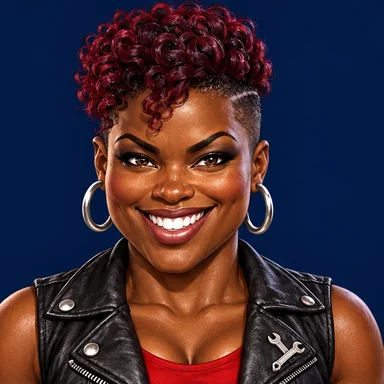
Ace
“Spark Plug” Brooks
The selective reraiser
More likely to raise a good preflop hand again rather than enter passively.
What to watch: Expect pushback before the flop. You do not need to defend every hand.
Meet Ace
Motorcycle mechanic. Spots hesitation faster than a loose bolt. Would rather set the pace than ask who's in charge.
“Sounds like this table needs a tune-up.”

Hank
“The Heat” Doyle
The stack-aware competitor
Gets more direct with strong hands when effective stacks are shallow.
What to watch: Count the chips behind before reading the size of his bet.
Meet Hank
Firehouse cook. Arrives early, takes charge, and turns up the heat. His mustache has yet to reveal a tell.
“Let's find out who's staying for dinner.”

Nova
“Drop Theory” Banks
The draw-powered aggressor
Applies pressure with strong draws and leans into heads-up pots. Still reassesses the price.
What to watch: Compare the bet with the board, not the headphones.
Meet Nova
Music producer, 26. Brings immaculate headphones and a demo nobody asked for. Knows exactly when a quiet room could use a little pressure.
“Okay, that part stays in the mix.”
New Orleans

Miles
“Easy Tempo” Reed
The pot controller
Checks medium-strength hands more often and favors smaller bets.
What to watch: A quiet pot does not prove a weak hand.
Meet Miles
Jazz bassist. Never rushes a good decision. Keeps a steady rhythm, then changes it when you stop listening.
“Let's leave a little room in there.”

Cleo
“On Air” Cole
The adaptive counter-player
Makes small adjustments after at least 20 observed decisions from an opponent.
What to watch: She can notice repeated public actions, never your folded cards.
Meet Cleo
Late-night radio host. Knows exactly when to fill the silence and when to let someone else explain themselves.
“Go ahead. I'm listening.”

Imani
“Contact Sheet” Brooks
The price-conscious observer
Favors smaller pots, accounts for expensive calls, and catches some modest river bets with made hands.
What to watch: Small bets may get a closer look. Large prices still matter.
Meet Imani
Street photographer, 29. Has three cameras and one very patient eyebrow. Happy to wait for the right frame. Less happy to pay too much for it.
“Hold that expression. Interesting choice.”
Austin

Red
“Reraiser” Riley
The draw-pressure specialist
More willing to bet or raise a strong draw, then reassesses when it misses.
What to watch: Watch the board: pressure can come from a draw or a made hand.
Meet Red
Drummer. Thinks a quiet table could use a little percussion. Her chips tend to arrive on the strong beat.
“I thought we were playing louder.”
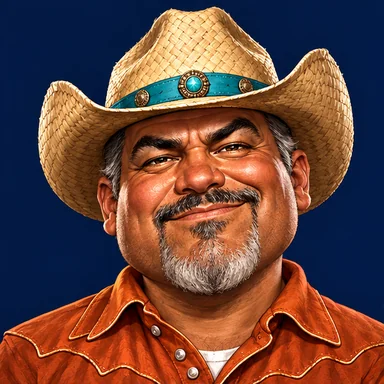
Tex
“Low & Slow” Torres
The selective trapper
Sometimes checks strong hands on quieter boards, mixing those with ordinary checks.
What to watch: Not every check is weak, and not every check is a trap.
Meet Tex
Barbecue pitmaster. Gives good hands time to develop. Knows when to turn up the heat and when to leave well enough alone.
“Can't rush the good stuff.”

Dex
“Split Time” Mercer
The short-stack pressure player
Reraises stronger preflop hands and gets direct with strong hands at shallow stacks.
What to watch: Check the effective stack before calling a large raise.
Meet Dex
Speedrunner, 25. Times his coffee maker. Likes a direct route through a short stack, but has learned that skipping the thinking is not a shortcut.
“Personal best at sitting still.”
Las Vegas

Roxy
“Plot Twist” Reyes
The loose aggressor
Enters wider and applies more pressure, especially heads-up.
What to watch: More raises do not mean better cards.
Meet Roxy
Karaoke host with a wardrobe that refuses to check. Likes an unexpected entrance. Occasionally brings the hand to match.
“Well, this scene needed something.”

Nico
“Remix” Cruz
The speculative connector
Favors suited and connected starting hands at sensible prices with chips behind.
What to watch: Cheap entries can contain connected cards, not just big pairs.
Meet Nico
Roller-rink DJ. Has never met a predictable evening he couldn't complicate. The headphones aren't helping his poker face.
“The original needed a remix.”

Gus
“The Great-ish” Bell
The polarized storyteller
Uses bigger later-street bets with strong hands and selected bluffs, checking more medium hands.
What to watch: A big bet can be value or a bluff. The bow tie is not evidence.
Meet Gus
Part-time magician. His rabbit retired. Now his disappearing act mostly involves other people's certainty.
“Perfectly ordinary cards. Unusual presentation.”

Vera
“Scenic Route” Voss
The late-position opportunist
Widens late and sometimes bets after the action has checked around.
What to watch: Notice her seat and the action before judging a raise.
Meet Vera
Road-trip singer. Missed the sensible turn three towns ago and found a better story. Her betting follows a similar itinerary.
“I never did like the obvious route.”
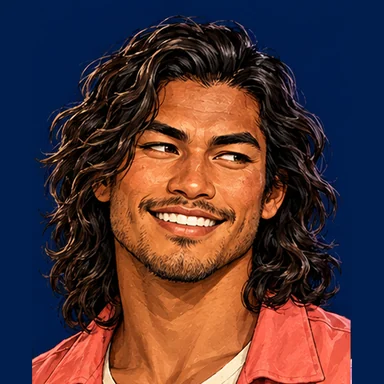
Kai
“Low Tide” Kealoha
The patient draw surfer
Prefers smaller pots with medium hands and affordable suited or connected entries when stacks are deep.
What to watch: A quiet start can still connect with a later card.
Meet Kai
Surfboard shaper, 28. In town for a design show. Waits for a decent wave and refuses to make a whole personality out of being busy.
“No rush. The ocean never checks its watch.”
Personalities, not crystal balls
A tendency is not a promise about the next hand. A patient opponent can bluff, and an aggressive opponent can have good cards. Notice the board, position, bet size, and chips behind before deciding what an action means.
The decision policy uses the acting computer player’s own cards and public information. It does not read your private cards. Cleo can make small adjustments after at least 20 observed decisions, but that does not give her access to folded cards.
New tables draw from the current roster. Older saved tables can retain earlier characters and behavior versions. Returning to a saved seat does not silently replace its lineup, so your saved table may differ from this directory.
Give the next hand a small goal
Try noticing whether a raise came from early or late position, or compare the amount to call with the pot. One useful observation is enough. The portraits are good company, not evidence about the cards.
Use the practice guide to choose a Hold’em format. If the actions are still new, start with the poker academy or keep the hand-ranking chart nearby.
Free single-player practice for adults 18+. Play chips only, with no deposits or cash prizes. Your next hand can wait.